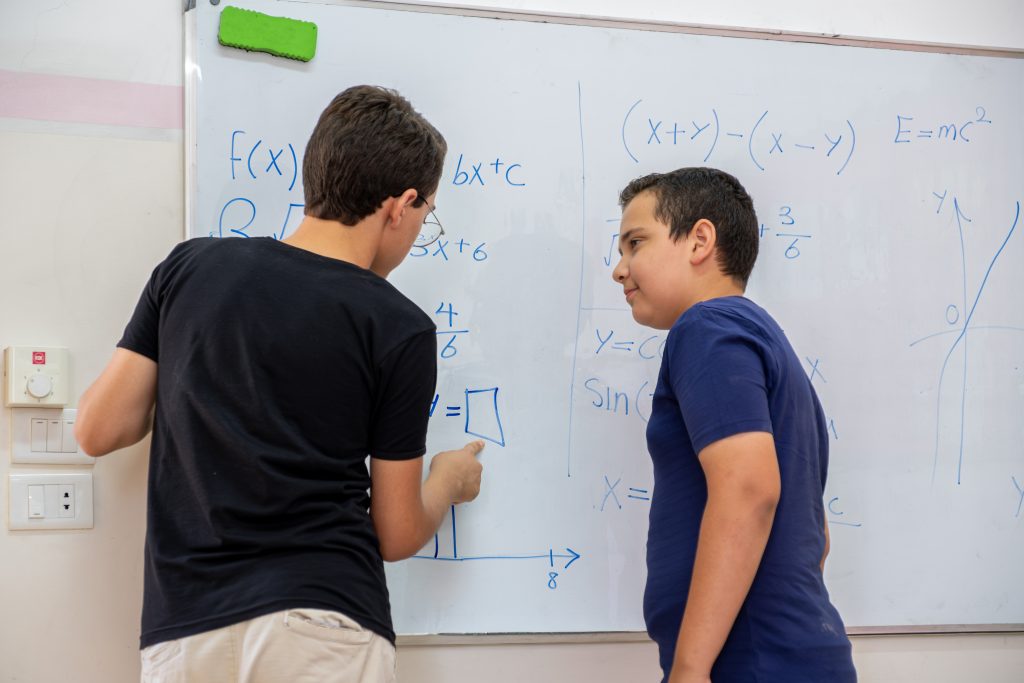
In the heart of high-poverty middle schools, where challenges like resource constraints and academic gaps loom large, a group of exceptional math teachers is transforming student outcomes with innovative yet practical strategies. A new study in the Middle School Journal uncovers the secrets behind their success, revealing eight key teaching practices that drive equitable and effective mathematics instruction. From fostering emotional well-being to balancing direct guidance with peer collaboration, these teachers demonstrate how intentional, data-driven approaches can unlock student potential.
AMLE sat down with study co-author Dr. Tye Campbell to explore these findings and their powerful implications for educators striving to make a difference in challenging settings. You can read a recap of the interview here, or explore the article in its entirety in Volume 56, 2025 – Issue 3 of Middle School Journal (member login required).
Study Overview
The study aimed to uncover the teaching practices of exceptional middle school math teachers in high-poverty schools. Campbell partnered with ULEAD, an initiative dedicated to identifying and sharing effective teaching strategies, to analyze a statewide database linking teacher and student performance data. From 3,561 middle school teachers, seven were selected based on strict criteria: teaching in Title I schools, having at least 20 students, and achieving student growth percentiles at or above the 90th percentile for three consecutive years.
These teachers were interviewed to identify common practices, which were categorized into instructional planning, instructional delivery, and classroom assessment, resulting in eight themes:
- Team planning,
- Mapping the curriculum,
- Attending to affect,
- Direct guidance alongside peer collaboration,
- Using whiteboards,
- Practicing without over-practicing,
- Data-driven reteaching, and
- Allowing redos.
Top Takeaways
When asked to highlight one finding for middle school educators, Campbell emphasized the combination of data-driven reteaching and allowing redos as having the most significant impact on student achievement. All seven teachers simply refused to let students fail, using assessment data to identify areas of weakness and reteach during dedicated “tier 2” intervention time or informal sessions, such as on Fridays.
For example, if students struggled with two-step equations, teachers provided targeted small-group instruction to ensure mastery. Additionally, four teachers allowed or required students to redo assignments until they achieved proficiency, fostering a mastery-oriented approach. Campbell noted that schools with built-in intervention time (30–45 minutes daily) saw significant benefits, suggesting that administrators should prioritize such scheduling to support student progress.
Balancing Direct Guidance and Peer Collaboration
A surprising finding was the teachers’ use of direct guidance alongside peer collaboration, which contrasts with recommendations from organizations like the National Council of Teachers of Mathematics (NCTM) that emphasize student-centered, dialogic approaches. All seven teachers employed direct instruction, such as the “I do/We do/You do” model, to explicitly teach problem-solving strategies, while also incorporating opportunities for students to work in pairs or groups to reason and practice.
Campbell stressed the importance of including teachers’ voices in policy decisions, as their practical expertise often challenges idealized, top-down recommendations.
Supporting Student Well-Being
The study also highlighted the importance of attending to students’ emotional well-being, a practice Campbell found critical for addressing the social and emotional challenges of middle school students in high-poverty schools. Four teachers conducted daily emotional well-being checks, using tools like tablets to gauge students’ feelings (e.g., “I’m Great” to “I’m in a dark space”). Others fostered a growth mindset through motivational talks or shared personal stories of overcoming math challenges. These strategies built positive teacher-student relationships, which Campbell noted are strongly correlated with improved mathematical achievement, helping students feel supported and motivated to engage in learning.
Practical and Accessible Practices
For resource-constrained schools, Campbell recommends starting with low-effort, high-impact practices like using lap whiteboards. Four teachers reported using whiteboards instead of paper and pencil, which increased student engagement and risk-taking due to the ease of erasing mistakes. This practice also served as a formative assessment tool, allowing teachers to gauge understanding quickly. Campbell encouraged teachers to select one or two practices that fit their context, such as whiteboards or redos, rather than overhauling their entire approach, making implementation feasible even in challenging settings.
Implications for Policy and Administration
Campbell underscored the need for policymakers to involve exceptional teachers in shaping educational guidelines, as their on-the-ground expertise often reveals practical solutions that differ from theoretical models. He praised Utah’s ULEAD model for systematically identifying effective teachers and suggested other states adopt similar data-driven approaches to inform professional development and policy.
For administrators, Campbell highlighted the value of team planning, with six teachers reporting regular collaboration to create lessons and anticipate misconceptions. He recommended providing dedicated, paid time for collaborative planning, such as during summer or weekly meetings, to enhance teacher innovation and morale. However, he acknowledged that resource constraints may require creative solutions, like using lunch hours, though this is less ideal.
Future Directions
Campbell plans to continue this research by exploring the practices of exceptional fourth-grade teachers in math and English Language Arts, examining how they integrate these subjects. While this shifts focus from middle school, it underscores the value of learning from effective practitioners across grade levels.
The study’s findings offer a practical “toolbox” for teachers, encouraging them to adapt these practices to their unique contexts while providing a foundation for future research into equitable teaching in high-poverty schools. The findings challenge some conventional recommendations, urging policymakers to center teachers’ voices and administrators to prioritize collaborative planning and intervention time.
Middle School Journal, a refereed journal, is an official publication of the Association for Middle Level Education. Online subscription to Middle School Journal is complimentary for AMLE members. A print subscriptions is also included with school memberships and are available at a discount for professional members. Contact membercenter@amle.org to add a print subscription to your membership.